
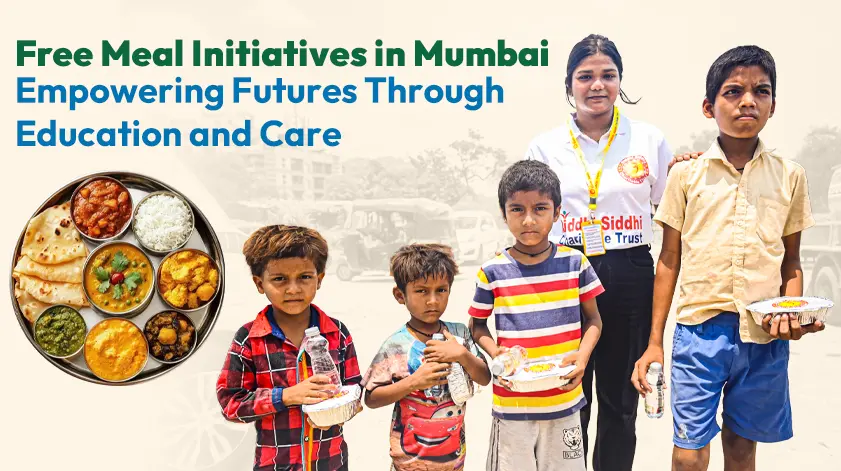
Free Meal NGO in Mumbai: How They Fight Hunger
-
 Admin: rsct
- Jan. 19, 2026
Free Meal Initiatives in Mumbai: How NGOs Are Fighting Hunger with Dignity
Mumbai is a city of opportunity, yet it is also home to a large population that struggles with food insecurity. Rapid urbanization, migration, and income inequality mean that many families—especially children—do not receive adequate daily nutrition. In this context, a free meal NGO in Mumbai plays a critical role in addressing hunger, malnutrition, and the long-term social consequences associated with food deprivation. Through structured programs, community kitchens, and partnerships, non-profit organizations are ensuring that nutritious meals reach those who need them most.
This content explains how free meal programs operate, why they are essential, and how food-focused non-profits contribute to sustainable social development in Mumbai.
The Reality of Hunger in Urban India
With a score of 25.8 in the 2025 Global Hunger Index, India has a level of hunger that is serious. Despite economic growth, hunger remains a persistent challenge in metropolitan regions. For children from low-income families, irregular meals can affect physical growth, cognitive development, school attendance, and overall well-being. Many parents working in the informal sector face unstable incomes, making it difficult to guarantee regular meals at home.
A well-organized free meal NGO in Mumbai steps in to fill this gap by providing consistent access to food, particularly for children living in slum communities, construction-site settlements, and homeless shelters. These initiatives are not limited to emergency relief; they are designed to create continuity and nutritional stability.
How Free Meal Programs Function
Free meal programs typically operate through a combination of the following models:
Community Kitchens
Centralized kitchens prepare meals in bulk under hygienic conditions. These meals are then distributed at fixed locations such as slum clusters, roadside feeding points, and community centers. This model allows a food donation NGO to maintain quality control while serving numerous beneficiaries daily.
School and Learning-Center Feeding
Many organizations collaborate with informal schools, tuition centers, and anganwadis. By integrating meals into the school day, a feed poor children NGO helps improve attendance and concentration, ensuring that education and nutrition progress together.
Mobile Meal Distribution
In areas where permanent kitchens are not feasible, mobile vans deliver freshly cooked food. This approach is particularly effective for reaching migrant families and homeless populations who move frequently.
Nutritional Focus and Meal Planning
Modern meal programs go beyond calorie fulfillment. NGOs emphasize balanced nutrition by including staples such as rice or roti, pulses, vegetables, and occasionally fruits. Special attention is given to protein and micronutrient intake for children.
A responsible food donation NGO works with nutrition advisors to design menus that are affordable yet nutritionally adequate. This approach ensures that free meals contribute meaningfully to health outcomes rather than offering only short-term hunger relief.
Impact on Children and Communities
The benefits of structured meal programs are measurable and long-lasting:
- Improved Child Health: Regular meals help reduce undernutrition and related illnesses.
- Better Educational Outcomes: Children who receive meals are more attentive and consistent in school attendance.
- Family Stability: When children receive meals through a free meal NGO in Mumbai, families can redirect limited resources toward housing, healthcare, and education.
- Community Trust: Transparent food distribution builds confidence between NGOs and local communities.
For many beneficiaries, these programs represent their most reliable source of daily nutrition.
Role of Donations and Community Support
Sustaining large-scale feeding programs like the Midday Meal requires consistent financial and material support. Donations may be directed toward raw food supplies, kitchen infrastructure, logistics, or volunteer coordination. A transparent food donation NGO maintains accountability through proper documentation, audits, and impact reporting.
Beyond monetary contributions, volunteers play a vital role in food preparation, packaging, distribution, and beneficiary engagement. Corporate participation through CSR initiatives also strengthens the reach and scalability of meal programs.
Feeding Children with Dignity
An important principle followed by every responsible feed poor children NGO is dignity. Food distribution is conducted in an orderly, respectful manner, avoiding practices that may stigmatize beneficiaries. Many NGOs encourage community participation, allowing residents to assist in distribution and oversight.
This dignity-first approach transforms meal programs from acts of charity into platforms for empowerment and social inclusion.
Challenges Faced by Meal-Based NGOs
Operating in a city as complex as Mumbai comes with challenges:
- Rising food and fuel costs
- Logistical constraints in densely populated areas
- Ensuring consistent funding
- Maintaining hygiene standards at scale
Despite these obstacles, a committed free meal NGO in Mumbai continues to innovate through partnerships, efficient supply chains, and data-driven planning.
The Broader Social Impact
Free meal initiatives contribute directly to national goals such as reducing hunger, improving child health, and supporting education. Over time, consistent nutrition helps break cycles of poverty by enabling children to grow into healthier, more capable adults.
When aligned with education, healthcare, and livelihood programs, food initiatives become a cornerstone of sustainable urban development rather than isolated relief efforts.
Conclusion
Hunger in urban environments is a complex challenge, but it is also one that can be addressed through organized, transparent, and compassionate action. NGOs working in the food security space are demonstrating that well-planned meal programs can deliver measurable social impact.
By supporting a free meal NGO in Mumbai like Riddhi Siddhi Charitable Trust, individuals and organizations contribute not only to feeding the hungry today but also to building a healthier, more equitable future. Likewise, every poor children NGO operating in Mumbai reinforces the idea that access to food is a fundamental right, not a privilege.
Sustained community involvement, responsible donations, and institutional partnerships will ensure that free meal initiatives continue to nourish lives and strengthen society for years to come.
As per the Indian Income Tax Department’s rules, a donor is required to add their Full Name, Address and PAN
number
in case they wish to claim tax exemption.
To get the 80-G certificate, please enter your PAN number.
We treat your personal information confidentially and will not transfer such details to any third parties.