

80G Tax Exemption
The Light That Reaches the Kitchen
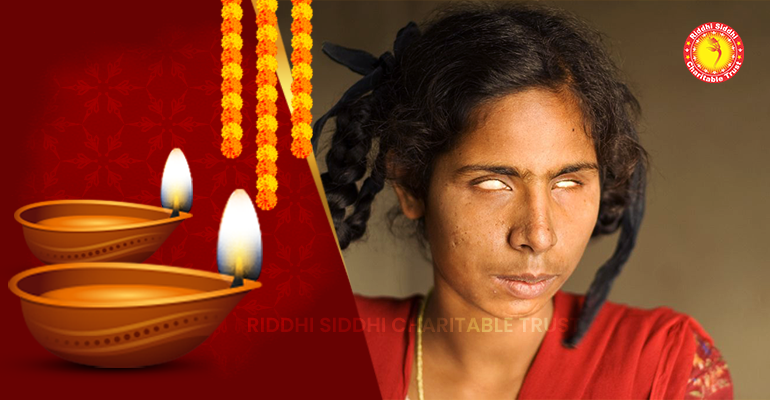
The Light That Reaches the Kitchen
Diwali is a festival you see. Rows of diyas on the balcony. Rangoli at the door. Sparks of colour across the night sky.
But for many of our blind brothers and sisters, Diwali is something else. It is the smell of ghee from a neighbour's kitchen. The sound of crackers from a street they cannot walk alone. The laughter of a celebration happening just on the other side of the wall.
And too often, it is a quiet question that no one hears them ask: Will there be food at home this Diwali?
Living on Someone Else's Time
For a person who cannot see, everyday tasks we never think about become hard. Going to the market. Checking the price on a packet. Carrying heavy bags home through traffic. Knowing whether the rice in the tin will last until the end of the month.
Many of the people we work with depend on family members, neighbours or kind strangers for their meals. Some live alone. Some earn a small, uncertain income. When the people they rely on are busy with their own festival preparations, they wait. They wait for someone to remember them.
During Diwali, when every home is full, that waiting feels the heaviest.
Why We Came
At Riddhi Siddhi Charitable Trust, we believe a festival is not complete until it reaches everyone. Not just the homes that are easy to see, but the ones that are easy to forget.
This Diwali, our team and volunteers set out with one simple goal: no blind family we could reach should have to depend on someone else for their festival food.
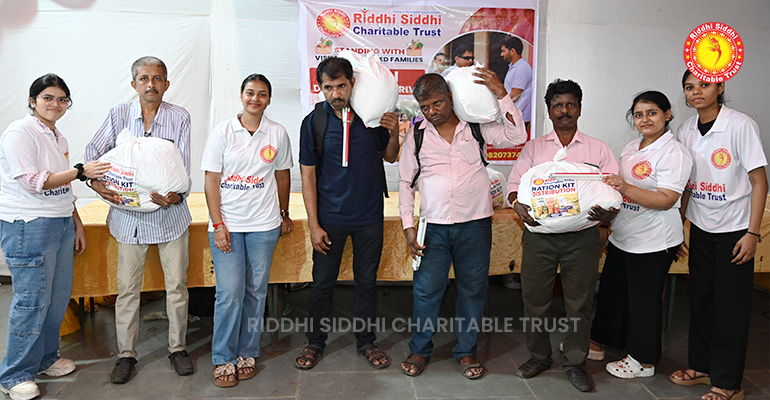
We prepared comprehensive ration kits for hundreds of visually impaired families and blind individuals across Mumbai. Each kit carried the basics a kitchen needs to cook with dignity — rice, wheat flour (atta), dal, sugar, cooking oil, tea, aromatic spices, and festival sweets. Enough to cook daily meals for weeks, and enough to make something special for Diwali.
The Day of the Distribution
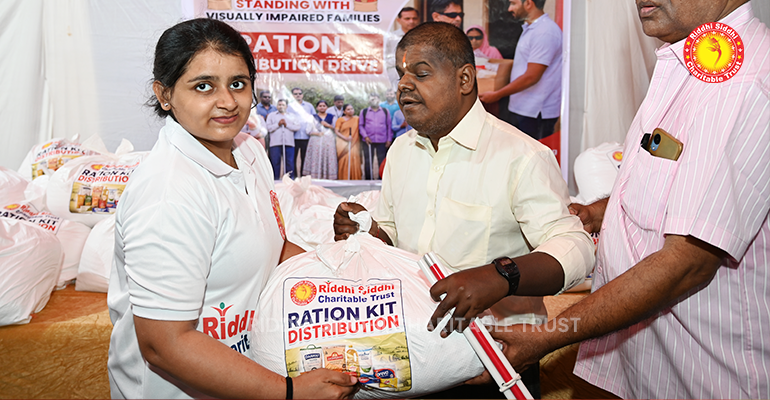
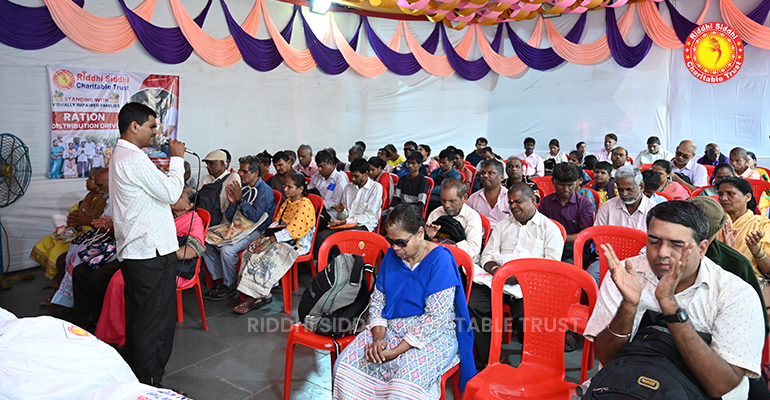
On the day of distribution, they came — some holding a white cane, some holding the arm of a friend or a child. Our volunteers met each person at the gate and walked with them, step by step, to their seat.
We did not just hand over a bag. We placed each person's hands on their kit and told them what was inside — this is the rice, this is the oil, this is the sweet box for Diwali. For someone who cannot see, knowing what you have is part of owning it.
Some smiled the moment they touched the packets. Some ran their fingers over the box of sweets for a long time. One elder held a volunteer's hand and blessed every one of us by name.
Ramakant-ji, an elderly visually impaired beneficiary, ran his trembling fingers over the sealed ration packets and smiled with tears in his eyes:
“Har saal hum bas mehak aur awaazon se Diwali mehsoos karte the. Aaj pehli baar laga ki tyohar hamare ghar bhi aaya hai.”
(Every year we only felt Diwali through the smell of ghee and the sounds of crackers. Today, for the first time, it feels like the festival has arrived in our home too.)
There were no speeches that mattered more than those moments.
What a Ration Kit Really Gives
A bag of rice is not a big thing. But for a blind person who usually waits for help, it means a few weeks without having to ask. It means cooking on their own schedule. It means offering tea to a guest during the festival, instead of being the one who is always given to.
It means independence. It means respect. It means Diwali at home, on their own terms.
- Wholesome Grains: 5kg Atta & 5kg Rice to ensure warm, home-cooked roti and rice every day.
- Essential Groceries: Protein-rich Dal, 1L Cooking Oil, Salt, Sugar, Tea, and staple spices.
- Diwali Festival Sweets: A box of fresh festival mithai so every home shares celebratory sweetness.
- Hands-On Dignity: Personally guided distribution where each person touches and knows their kit.
- Independence & Self-Respect: Weeks of cooking on their own schedule without having to ask.
The Light We Cannot Give, and the Light We Can
We cannot give back sight. But we can make sure the darkness of their eyes does not become the darkness of their kitchen.
This Diwali, the light did not only shine from diyas. It shone from full plates, warm stoves and grateful smiles.
Be part of the next light. Sponsor a ration kit today.
✦ True prosperity is not what we keep. It is what we share. Shubh Deepavali.
Know Your NGO
Verified NGO
100% Fund Transparency
80G Tax Exemption
100%
Dignified Distribution
500+
Families Supported
Zero
Administrative Cut
Riddhi Siddhi Charitable Trust is a registered, government-recognized non-profit organization dedicated to
eradicating hunger, providing disability support, and upholding human dignity. Our outreach drives ensure
that visually impaired individuals and marginalized families receive essential nutrition with complete
respect — verified through on-ground photo documentation and instant 80G tax deduction receipts for all donors.
Recent Compassionate Donors
Kind souls whose generosity brings light, food, and independence to blind families this Diwali
Light a Stove This Diwali
Sponsor a blind family's ration kit and make sure no kitchen stays dark this festive season.
Frequently Asked Questions
Each family ration kit contains staple groceries: 5kg Atta (wheat flour), 5kg Rice, Dal, 1L Cooking Oil, Salt, Sugar, Tea, and essential spices — enough to sustain a family for several weeks. In addition, every kit includes a box of festive sweets (mithai) so they celebrate Diwali with pride and joy.
Our team works directly with blind associations, local disability community workers, and shelter networks to identify visually impaired individuals and families living in poverty or isolation. Our volunteers assist each beneficiary from the entrance gate, place their hands on each item so they know what they own, and arrange transport where needed.
Yes! You can enter your family name or blessing in the "In Name of / Diwali Blessings" field. Your blessings will be recorded and shared as part of the drive.
Yes! All donations made to Riddhi Siddhi Charitable Trust qualify for a 50% tax exemption under Section 80G of the Indian Income Tax Act. A digital 80G receipt is automatically generated and emailed to you immediately after successful payment.
We accept UPI (Google Pay, PhonePe, Paytm, BHIM), Credit Cards, Debit Cards, Net Banking, and digital wallets via our secure Razorpay gateway.
As per the Indian Income Tax Department’s rules, a donor is required to add their Full Name, Address and PAN
number
in case they wish to claim tax exemption.
To get the 80-G certificate, please enter your PAN number.
We treat your personal information confidentially and will not transfer such details to any third parties.