
How to Identify a Trustworthy Platform for Giving
-
 Admin: rsct
- Sept. 18, 2026
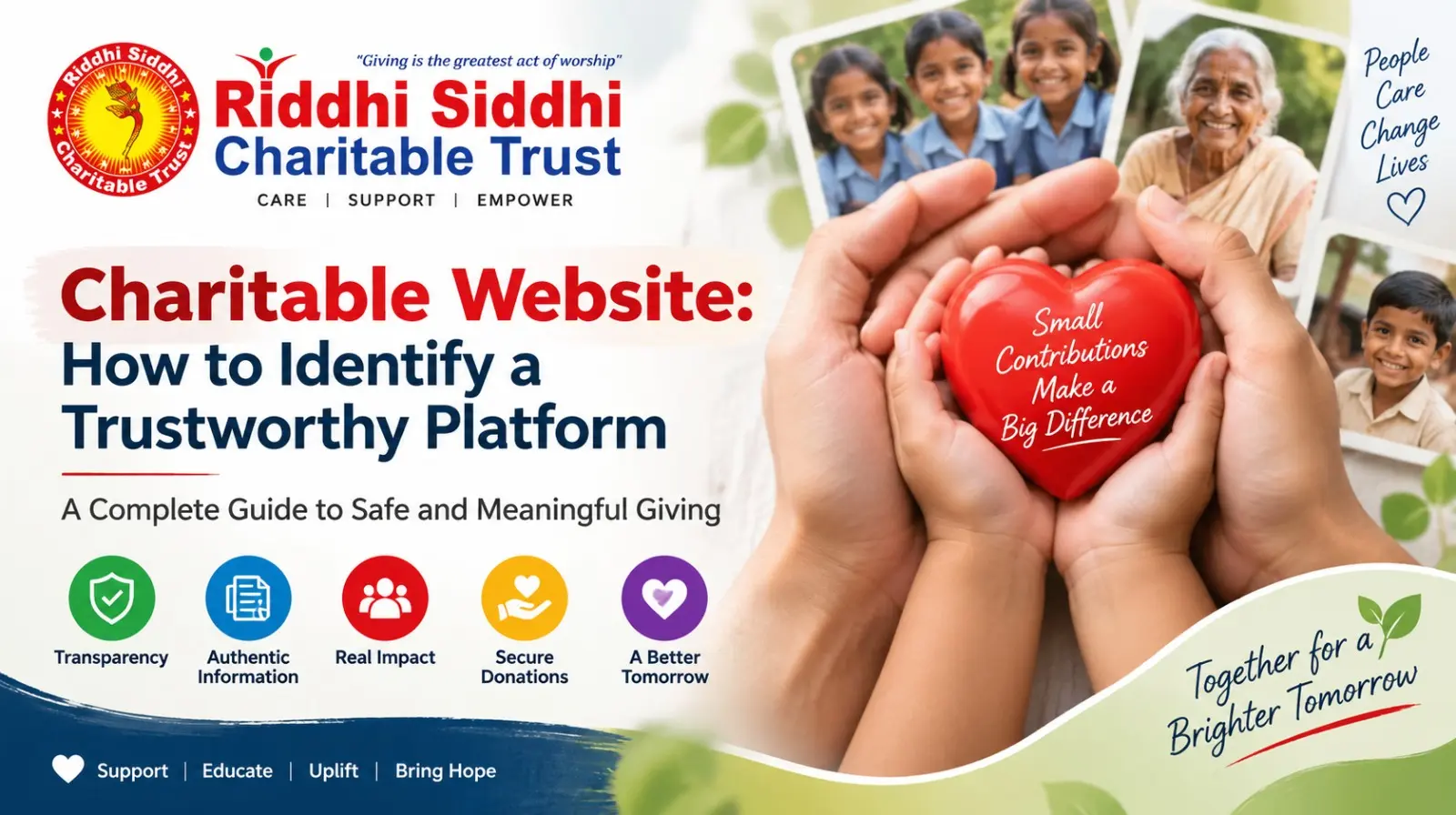
Charitable Website: How to Identify a Trustworthy Platform for Giving and Social Impact
When people want to support education, healthcare, hunger relief, elderly care, disaster response, or other social causes, the internet makes donating easier than ever. However, choosing the right charitable website requires more than simply clicking a “Donate” button. Donors should understand who operates the organization, where funds are directed, what programmes are being implemented, and whether relevant registrations and financial information are available.
A responsible approach to giving helps donors make informed decisions while allowing genuine nonprofit organizations to create sustainable social impact. Find this blog for all the details.
What Is a Charitable Website?
A charitable website is an online platform operated by a nonprofit organization, charitable trust, foundation, or fundraising initiative to explain its mission, showcase projects, receive donations, recruit volunteers, and communicate its social impact.
A good website should make important information accessible rather than relying only on emotional appeals. Ideally, visitors should be able to understand:
- The organization's mission and objectives
- The causes it supports
- Its registration and compliance information
- Donation procedures
- Contact information
- How contributions are intended to be used
- Project updates and impact reports
- Volunteer opportunities
- Relevant tax information
This information helps potential donors conduct basic due diligence before contributing.
Why Is Transparency Important When Donating?
Transparency is one of the most important principles of responsible charitable website. A donor should be able to distinguish between an organization that simply requests financial support and one that demonstrates how it works.
For example, organizations involved in CSR activities may need to meet specific eligibility requirements. The Ministry of Corporate Affairs explains that certain registered public trusts, societies, and Section 8 companies can act as CSR implementing agencies when applicable requirements are satisfied.
The same principle applies to individual donors: information should be verifiable wherever possible.
A trustworthy organization should ideally provide information about:
- Its legal structure and registration.
- Its programmes and beneficiaries.
- Its leadership or governing structure.
- Its financial and annual reporting.
- Its donation process.
- Its contact details.
- Its compliance credentials where relevant.
SEBI's work on social-impact reporting also highlights the importance of disclosures covering governance, finances, compliance, credibility, and social impact.
How Can You Verify a Charitable Organization in India?
Before donating through a charitable website, donors can conduct several basic checks.
1. Check the organization's registration information
Look for the organization's legal name, registration details, PAN, and other relevant credentials. Depending on its structure and activities, different registrations may apply.
The Government of India's NGO Darpan platform provides an information and registration interface for voluntary organizations and NGOs.
2. Check tax-related eligibility
Some eligible charitable institutions can provide donors with tax benefits under Section 80G, subject to applicable conditions.
The Income Tax Department states that Section 80G provides deductions for donations to specified funds and charitable institutions, with the percentage and qualifying conditions depending on the category of donation. It also states that cash donations exceeding ₹2,000 are not eligible for deduction under this section.
Donors should therefore avoid assuming that every donation automatically qualifies for a tax deduction. The organization's current eligibility should be independently verified.
3. Look for impact information
An organization should ideally explain what it does beyond simply asking for money.
Useful information may include:
- Number and type of beneficiaries
- Locations of programmes
- Education initiatives
- Healthcare activities
- Food or ration distribution
- Elderly-care programmes
- Women's empowerment initiatives
- Disaster-relief activities
- Annual reports
- Project photographs and updates
Impact reporting gives donors a better understanding of how an organization's mission translates into actual activities.
What Should You Look for on a Donation Platform?
A well-developed charitable website should answer common donor questions quickly.
Who receives the money?
The platform should clearly identify the nonprofit, trust, or organization receiving donations.
What will the donation support?
Donors should be able to understand whether funds support education, food, healthcare, emergency relief, elderly care, animal welfare, or another programme.
Can donors contact the organization?
A physical address, email address, phone number, or contact form increases accountability and gives donors a way to seek clarification.
Are donation receipts provided?
Donors should retain appropriate payment records and receipts. Where a tax deduction is claimed, documentation becomes especially important.
Is there information about privacy and payment security?
Donation forms can involve sensitive information. A responsible platform should explain how donor information is handled and protected.
What Is the Role of Online Donations?
A charitable website can make philanthropy more accessible by allowing people to support causes without visiting a physical office.
Online platforms can facilitate:
- One-time donations
- Recurring contributions
- Cause-specific donations
- Corporate giving
- Volunteer registration
- Campaign sharing
- Digital receipts
- Project awareness
However, convenience should not replace due diligence. Donors should still investigate the organization before making substantial contributions.
For donations involving foreign contributions, additional regulatory requirements may apply. India's Ministry of Home Affairs provides official FCRA information, including verification facilities and information about registered associations.
How Can You Donate Responsibly?
Before donating through a charitable website, consider following this simple checklist:
Research → Verify → Understand → Donate → Retain Records → Follow Impact
Start by researching the organization's mission. Verify available registration and compliance information. Understand what your contribution is intended to support. Donate through the organization's legitimate payment mechanism, retain receipts and transaction records, and follow subsequent project or impact updates.
Donors should also avoid making decisions solely because of emotionally compelling photographs or urgent messaging. Emotional connection can inspire generosity, but factual information should support the final decision.
Riddhi Siddhi Charitable Trust and Online Social Giving
For people looking for an organization working across multiple social causes, Riddhi Siddhi Charitable Trust provides information about its community-development activities through its online platform.
According to its official website, the trust works in areas including education, healthcare, disaster relief, women's empowerment, elderly care, food support, medical assistance, and animal welfare.
Its website also provides information about volunteering and donation options, allowing supporters to explore different ways of contributing.
Frequently Asked Questions
What makes a charitable website trustworthy?
A trustworthy charitable website should clearly identify the organization behind it, provide relevant registration and contact information, explain its programmes, communicate how donations are used, and provide appropriate documentation and updates.
How can I check whether an NGO is genuine?
Start by checking its legal and registration information, official website, contact details, available reports, tax-related credentials, and relevant government databases such as NGO Darpan. For foreign contributions, FCRA records can also be relevant.
Are charitable donations eligible for tax deductions in India?
Some donations to eligible institutions and funds can qualify for deductions under Section 80G, subject to applicable conditions. The Income Tax Department should be treated as the authoritative source for current requirements.
As per the Indian Income Tax Department’s rules, a donor is required to add their Full Name, Address and PAN
number
in case they wish to claim tax exemption.
To get the 80-G certificate, please enter your PAN number.
We treat your personal information confidentially and will not transfer such details to any third parties.